When the Plunger Fails: Drain Clearing in Vila Jacuí
You have plunged the kitchen sink for ten minutes, poured two kettles of boiling water down the drain, and the water still sits there, mocking you. That moment — when the usual method does not work — is exactly where most beginners get stuck. If you are dealing with a stubborn blockage in this district of São Paulo’s East Zone, the next practical step is to call a desentupidora Vila Jacuí rather than keep improvising with tools that were never designed for the job.
Why does the plunger stop working in the first place?
A plunger creates pressure and suction inside a short section of pipe. It works beautifully on a soft clog close to the drain opening — hair in a bathroom sink, grease at the top of a kitchen trap. It fails for a simple reason: pressure cannot travel past a vent or a long horizontal run. Once the obstruction sits deeper than roughly a metre, the force you generate dissipates before it reaches the blockage.
In Vila Jacuí, many homes and small commercial buildings were plumbed decades ago, and the original pipe diameter has effectively shrunk over time. Grease, soap residue and food particles coat the inner wall year after year. What started as a 100 mm pipe may now pass water through a 60 mm opening. A plunger cannot restore that lost diameter — it can only shift a loose plug.
Ask yourself three questions before you try again. Is the water draining slowly everywhere in the house, or only at one fixture? Does the drain gurgle when you run another tap? Have you noticed a smell that was not there last month? If the answer to any of these is yes, the problem is in the branch line or the main sewer, not at the fixture, and no amount of plunging will fix it.
What should you try before calling a professional?
There is a short, honest list of things a beginner can do safely. Anything beyond it starts to risk damage to the trap, the seals or the pipe joints themselves.
- Remove and clean the P-trap under the sink. Place a bucket underneath first — it will be full of dirty water.
- Use a hand auger (a drain snake) if you have one. Feed it slowly and crank clockwise; do not force it past a hard stop.
- Try a plunger correctly: block the overflow hole with a wet cloth so the pressure goes down the drain, not out the side.
- Check other fixtures to confirm whether the blockage is local or building-wide.
What you should not do is pour chemical drain cleaner into a drain that is already fully blocked. The caustic liquid will sit on top of the standing water, damage the trap and the pipe lining, and create a hazard for whoever opens the pipe later. Chemical cleaners are for maintenance, not for clearing a complete blockage.
If you have tried the steps above and the water level has not moved, stop. Continuing to force a snake or a plunger into a blocked line is how cracked traps and separated joints happen, and that turns a simple clearing job into a repair job.
What does a professional actually do that you cannot?
This is the part most beginners underestimate. A trained team does not simply push harder — it uses equipment and diagnostic logic that change the nature of the job.
Rotating cables and hydrojetting
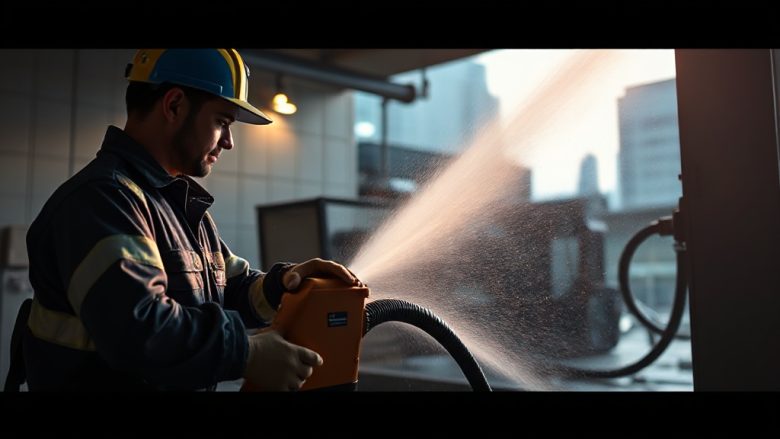
A motorised drain machine drives a steel cable with a cutting head through the blockage, breaking up grease, roots and scale rather than just pushing them aside. For lines that are heavily coated, hydrojetting uses high-pressure water jets to scour the pipe wall back to something close to its original diameter. That is a different result from simply opening a channel through the clog.
Camera inspection
A camera pushed into the line shows what the obstruction actually is — roots, a collapsed section, a foreign object, or a build-up of fat. Without that information, any clearing is guesswork, and the blockage tends to return within weeks.
Access to the right entry points
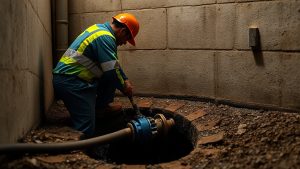
Professionals know where the inspection covers, cleanouts and manholes are, and how to work from them without flooding your floor. In older Vila Jacuí properties, those access points are often hidden under tiles or behind walls, and finding them is half the job.
When you book a desentupidora Vila Jacuí São Paulo SP, ask what equipment will be used and whether a camera inspection is included. A team that can explain its method before arriving is usually a team that will solve the problem rather than just open a hole in it.
Why does the same drain keep blocking again?
Repeat blockages are the single most common complaint from people who tried to fix the problem themselves. The reason is almost always that the underlying cause was never addressed. Clearing a channel through a grease mass leaves 90 percent of the mass in place; it re-seals the pipe within a few months.
There are three recurring causes in this area. First, grease and food waste from kitchens that have no proper grease trap. Second, tree roots entering old clay or concrete sewer lines at the joints — common in streets with mature trees. Third, structural settling, where the ground has shifted and created a low point in the pipe where solids collect.
A proper job identifies which of these applies. If roots are the cause, cutting them out without inspecting the joint means they will return. If settling is the cause, the line may need relining or partial replacement, and no amount of clearing will stop the recurrence. Ask for the camera footage or a clear explanation of what was found.
What does an emergency call-out look like in practice?
Blockages do not respect office hours. Sewage backing up into a ground-floor bathroom at ten at night is a health issue, not an inconvenience, and it needs a response within hours.
A reliable desentupidora em Vila Jacuí São Paulo SP operates around the clock, which matters because the alternative is waiting until morning while contaminated water sits in your home. When you call, have three pieces of information ready: the address with any access instructions, the number of fixtures affected, and whether sewage is backing up or only draining slowly. That last detail tells the technician whether to treat it as an emergency or a scheduled job.
Expect the team to arrive with a truck or van carrying a drain machine, jetting equipment and protective gear. Ask them to confirm the price before work begins, and ask what happens if the blockage turns out to be structural. A transparent provider will explain the difference between clearing and repair before starting, not after.
How do you choose the right provider and prevent the next blockage?
Choosing well comes down to a few verifiable points. Confirm that the company serves your specific neighbourhood rather than a vague metropolitan area, that it has 24-hour emergency coverage, and that it can describe its equipment. A provider that cannot name its tools is a provider that will improvise in your home.
| Signal | What it tells you |
|---|---|
| Clear price quoted before work | No surprise charges after the job |
| Camera inspection offered | They diagnose rather than guess |
| 24-hour phone line | Real emergency capability |
| Explanation of the cause | They aim to prevent recurrence |
Prevention is straightforward once the cause is known. Install strainers in every drain, never pour cooking oil down the sink, and run hot water through kitchen drains weekly. If you have mature trees near your sewer line, have the line inspected every couple of years rather than waiting for a backup. For commercial kitchens, a grease trap is not optional — it is the difference between a maintenance schedule and a monthly emergency.
Finally, keep the number of a trusted provider on hand before you need it. The worst time to search for help is when sewage is rising in your shower.
Common questions beginners ask
Can I use a pressure washer to clear my own drain?
No. A domestic pressure washer delivers water at the wrong pressure and volume for drain work, and the nozzle can jam or damage the pipe. Hydrojetting equipment is purpose-built and operated by trained technicians for good reason.
How long should a proper drain clearing take?
A straightforward blockage is usually cleared within an hour. Jobs involving roots, camera inspection or access through a manhole take longer, and the technician should tell you the expected duration before starting.
Is a slow drain always a sign of a blockage?
Not always. A partially closed valve, a blocked vent pipe or a failing trap can all cause slow drainage. That is why diagnosis matters more than brute force — the fix depends entirely on the cause.