Most beginner cooking advice tells you to learn more. More recipes, more techniques, more equipment. That’s backwards. The real problem when you’re starting out is that you’re making too many decisions at once — what pan, what heat, what order, how long, how much salt. The easy cooking tips for beginners that actually work are the ones that quietly remove those decisions before you even turn on the stove. Below are ten habits that do exactly that. None of them are complicated. All of them make the difference between a stressful scramble and a meal you’re happy to eat.
1. Read the whole recipe before you touch anything
This sounds obvious and almost nobody does it. Reading the full recipe first tells you whether you need to preheat the oven, whether something has to chill for an hour, and whether the ingredient list is hiding a step you’ll only discover halfway through.
It takes two minutes. It saves you from the classic beginner disaster of realising, mid-sizzle, that you were supposed to marinate the chicken last night. Once you’ve read it through, you also know what you can skip or swap without breaking the dish.
2. Get everything chopped and measured before the heat goes on
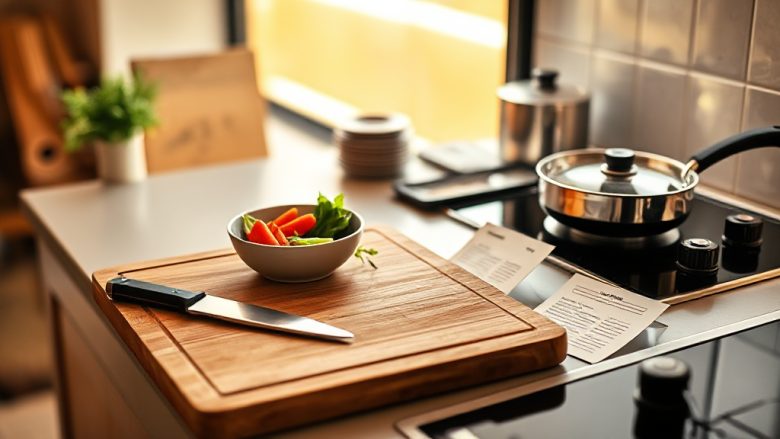
Professional kitchens call this mise en place, which just means “everything in its place.” You don’t need the French term. You need a chopping board, a few small bowls, and the discipline to prep before you cook.
Here’s why it matters so much when you’re learning: cooking moves fast once a pan is hot, and beginners lose control because they’re still dicing an onion while garlic burns behind them. If everything is ready, you’re just adding things in order. That’s it. That’s the whole skill.
It also means you’ll notice a missing ingredient before it’s a problem. Running out of stock mid-recipe is annoying. Running out of stock while your pan is smoking is a small crisis.
3. Preheat your pan properly and wait for it
A cold pan is the single most common reason beginner food sticks, steams instead of browns, and turns out pale and sad. Heat the pan first, then add the oil, then add the food. Give it a minute or two before you even think about touching anything.
You’ll know it’s ready when a drop of water flicked in sizzles and evaporates, or when the oil shimmers and moves more easily across the surface. If food goes into a properly hot pan with a little space around it, it releases on its own once it’s browned. If it’s stuck, it usually just needs another thirty seconds.
4. Salt in layers, not all at once at the end
Beginners tend to salt once, at the end, and then wonder why the dish tastes flat even though they added plenty. Salt works best when it goes in at several points — a pinch on the onions, a pinch on the protein, a taste-and-adjust at the end.
Layering means the seasoning is distributed through the food rather than sitting on top of it. It also means you’re tasting as you go, which is the habit that separates people who can cook from people who can follow a recipe. Taste at the end of every stage. Adjust. Taste again.
One practical note: if a dish tastes like it’s missing something and you can’t work out what, it’s almost always salt or acid, not more spice.
5. Learn three heat levels instead of chasing exact temperatures
You don’t need a thermometer to cook well. You need to know what low, medium and high actually look like in your kitchen, because every hob and every pan is a bit different.
Low is for sweating onions, melting butter, and gently warming sauces. Medium is your workhorse — most things cook here. High is for searing, stir-frying, and getting colour fast before the inside overcooks. The trick is that you can always turn the heat down, but you can’t un-burn something. When in doubt, start lower than you think you need.
If something is browning too quickly on the outside while staying raw in the middle, that’s your cue to drop the heat and give it more time. That one adjustment fixes a huge share of beginner cooking problems.
6. Keep your knife sharp and your board still
A dull knife is more dangerous than a sharp one, because it slips instead of cutting and you end up pushing hard in the wrong direction. A sharp knife goes where you aim it. If you only maintain one piece of kitchen equipment, make it this one.
Put a damp cloth or a silicone mat under your chopping board so it doesn’t slide around while you work. It takes two seconds and it makes the whole job feel steadier and safer.
You also don’t need fancy knife skills. A simple rocking motion — tip of the blade down, push forward and down, lift and repeat — will get you through onions, carrots, and most vegetables without any drama. Curl your fingertips back so your knuckles guide the blade.
7. Give food room in the pan
Crowding is why beginner stir-fries come out soggy and beginner steaks come out grey. If you pile food into a pan, it releases moisture faster than the pan can evaporate it, so everything steams in its own liquid instead of browning.
The fix is simple and slightly annoying: cook in batches. Brown half the mushrooms, tip them onto a plate, then do the rest. Yes, it takes longer. It also tastes completely different.
Use a pan that’s bigger than you think you need. When you’re not sure, go one size up.
8. Taste as you go, and keep a backup plan
Tasting while you cook is the fastest way to learn what each ingredient is doing. A spoonful at the start, a spoonful halfway, a spoonful at the end — you’ll start to recognise how flavours change and how much seasoning a dish actually needs.
Alongside that, accept that some meals won’t work out. Keep something simple in the cupboard for those nights — eggs, pasta, tinned tomatoes, frozen peas. Having a fallback removes the pressure that makes beginners tense, and tense cooks make worse decisions.
If a sauce tastes too sharp, a small knob of butter or a pinch of sugar will usually round it out. If it’s too salty, add more of whatever the bulk is — more liquid, more vegetables, more pasta water. Very few mistakes are unfixable.
9. Clean as you go and reset your station
A cluttered workspace makes cooking feel chaotic, and chaos is what makes beginners rush. While something simmers, wipe the counter, rinse the board, put the spices back. You’re not being tidy for its own sake — you’re keeping the next five minutes easy.
Fill the sink with hot soapy water before you start. Anything that finishes its job goes straight in. By the time you sit down to eat, there’s almost nothing left to deal with, which makes the whole experience feel far less like a chore.
10. Cook the same three dishes until they’re automatic
Variety is overrated when you’re starting out. Pick three meals you genuinely like — something with pasta, something with rice, something with eggs — and cook each of them four or five times over a month.
The first attempt will be clumsy. The third will be fine. By the fifth, you’ll be adjusting seasoning without thinking about it, and you’ll start to notice how the techniques carry across to other dishes. That’s how cooking actually becomes easy: not by learning a hundred recipes, but by getting fluent in a handful and letting the rest follow.
Once those three feel comfortable, add a fourth. Then a fifth. The confidence builds faster than you’d expect, mostly because you stop second-guessing every step.
Start here tonight: pick one of these habits — reading the recipe through, or prepping before you cook — and use it for your next meal. Just one. Do it again tomorrow. Within a couple of weeks you’ll notice that cooking has stopped feeling like a test you might fail and started feeling like something you just do. That shift is the whole point of these easy cooking tips for beginners, and it happens faster than most people believe.