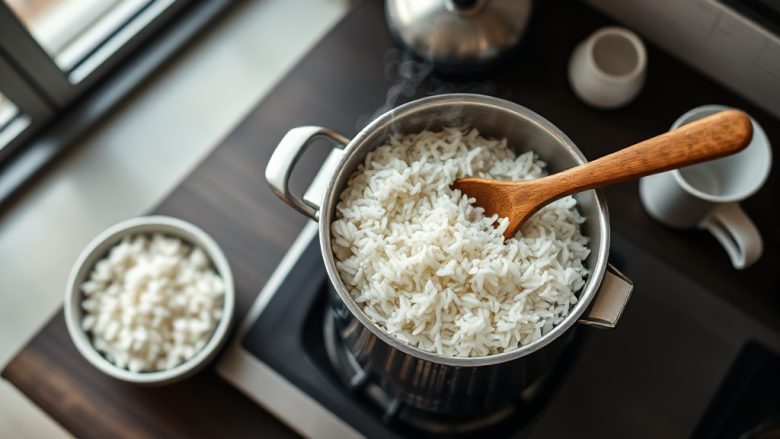
Use a 1:1.5 ratio of rice to water by volume, bring it to a boil over high heat, drop it to the lowest simmer your stove can hold, cover, and cook for 12 minutes. Then take it off the heat and let it rest, still covered, for 10 minutes before you lift the lid. That’s it. That’s the whole method, and it works for long-grain white rice on gas, electric, and induction hobs. Everything below is about why those numbers hold and what to do when they don’t.
I’ve cooked rice on a gas ring in London, a temperamental electric coil in a rented flat, a campfire in the Andes, and a rice cooker that a friend swore by and I quietly distrusted. The variables change. The ratio, the heat, and the rest don’t. If you learn how to cook rice perfectly every time by fixing those three things, you stop guessing and start getting the same result on a Tuesday night as on a Sunday.
The Base Method: Ratio, Heat, Rest
Measure the rice first, then match the water to it. One cup of long-grain white rice to one and a half cups of water. Not two cups. The old two-to-one rule comes from a time when rice was cooked in far more water and drained, and it produces the gluey, swollen grains that give home-cooked rice a bad name. One and a half is the sweet spot where the grains absorb what they need and the rest steams off.
Put the rice and water in a heavy saucepan with a tight-fitting lid. Add a pinch of salt if you like, roughly a quarter teaspoon per cup of rice. Set it over high heat, uncovered, and wait for a proper boil. You want the surface to be moving, not just steaming. Once it boils, turn the heat down as low as it will go and put the lid on. Set a timer for 12 minutes. Do not stir. Do not peek. Every time you lift the lid you lose the steam that’s doing the cooking above the waterline.
After 12 minutes, turn off the heat and leave the pot exactly where it is, lid on, for 10 minutes. This rest is the step most people skip and it’s the one that makes the difference. During the rest, the remaining moisture distributes evenly through the grains and the starch on the surface settles. Lift the lid, fluff with a fork, and you’re done.
That’s the method. The rest of this article is about the parts that trip people up: rinsing, the pot, and what to do when the rice in front of you is already wrong.
Should You Rinse Rice? Yes, and Here’s Why
Rinse the rice. I’ll be blunt about this because I’ve tested it side by side more than once, and the difference is not subtle. Unrinsed long-grain rice comes out noticeably stickier, with a cloudy, pasty film on the grains. Rinsed rice gives you separate, distinct grains that hold their shape and don’t clump into a mound you have to hack apart with a spoon.
The reason is surface starch. Milled white rice carries a fine dust of loose starch from the milling process. When that starch hits hot water, it gelatinises and glues the grains together. Rinsing it away before cooking takes thirty seconds and changes the texture of the finished dish more than any expensive pan will.
Here’s how to do it properly. Put the rice in a bowl or the pot itself, cover it with cold water, and swirl it with your fingers until the water turns milky. Pour the water off, keeping the rice back with your hand or the lid. Repeat three or four times, until the water runs mostly clear. It doesn’t need to be perfectly transparent — two or three rinses is usually enough for white rice. For basmati, which is aged and drier, four or five rinses and a twenty-minute soak give you the long, separate grains you get in a good biryani.
Don’t rinse brown rice the same way. It’s not milled to the same degree, so there’s less surface starch to remove, and the bran layer is what gives it its nutty flavour. A quick rinse to remove dust is fine. A long soak is not — it makes the outside mushy before the inside is cooked.
The Pot Matters More Than You Think
You don’t need a rice cooker, but you do need a pot with a heavy base and a lid that sits flush. A thin aluminium pan will develop hot spots that scorch the bottom layer of rice while the top is still crunchy. A heavy stainless steel or enamelled cast iron pan spreads the heat evenly and holds it during the rest, which is when the last of the cooking actually happens.
The lid is just as important. A loose lid lets steam escape, and once steam escapes, your ratio is wrong — the water you measured is evaporating instead of being absorbed. If your lid wobbles, lay a sheet of foil over the pot before you put the lid on, or use a clean tea towel folded under the lid to catch the condensation. Both are old tricks and both work.
Size matters too. Use a pot that’s roughly twice the volume of the cooked rice. Too small and the rice steams unevenly and boils over. Too large and the water spreads into a thin layer that evaporates before the rice is done. A two-litre saucepan handles one cup of dry rice comfortably.
One more thing: match the pot to the hob. On induction, a flat, magnetic base is non-negotiable. On gas, a wide, heavy pan is better because the flame wraps the sides and heats more evenly. On electric coils, preheat the empty pot for a minute before adding anything — coils take time to respond and you don’t want the rice sitting in lukewarm water while the element catches up.
Troubleshooting: Sticky, Crunchy, or Burnt
Something went wrong. It happens to everyone, including people who’ve cooked rice for decades. Here’s how to diagnose what happened and how to fix it, either in the pot or on the plate.
Sticky or gluey rice. Nine times out of ten this is one of three things: you didn’t rinse, you used too much water, or you stirred during cooking. Stirring releases more surface starch and breaks the grains, which is exactly what you don’t want. If the rice is already cooked and clumped, spread it on a tray and put it in a low oven for five minutes to dry the surface, then fluff it with a fork. It won’t be perfect, but it’ll be edible. Next time, rinse properly and leave the spoon alone.
Crunchy or undercooked rice. The grains are hard in the centre and the water is gone. This usually means the heat was too high and the water boiled off before the rice absorbed it, or the lid was loose. If you catch it before the rest, add two tablespoons of hot water, put the lid back on, and give it five more minutes on the lowest heat. If you catch it after, the same trick works but you’ll need to steam it a bit longer. Don’t add cold water — it shocks the grains and makes them split.
Burnt rice. You can smell it before you see it. The bottom layer has caught. Don’t stir it — stirring drags the burnt flavour through the whole pot. Instead, take the pot off the heat immediately, lay a slice of bread or a whole onion on top of the rice, put the lid back on, and leave it for ten minutes. The bread or onion absorbs the smoky smell. Then spoon the rice off the top, leaving the burnt layer stuck to the base. Soak the pot with warm water and washing-up liquid before you try to scrub it.
Rice that’s cooked but wet. The grains are soft but sitting in a puddle. You used too much water, or your lid let too much condensation drip back in. Tip the pot carefully over the sink, holding the rice back with the lid, and drain off the excess. Then return it to the lowest heat, uncovered, for two or three minutes to steam off the rest. Fluff with a fork and serve immediately.
Rice that’s fine but cold by the time you serve. Keep it in the pot, lid on, off the heat. It’ll hold for twenty minutes without drying out. If you need longer, spread it in a shallow dish, cover it, and reheat with a splash of water in a steamer or microwave. Reheating in a dry pan makes it hard and chewy.
Scaling Up and Down Without Ruining It
The 1:1.5 ratio holds whether you’re cooking half a cup or four cups of rice. What changes is the timing and the pot. A small batch — half a cup of dry rice — cooks in about 10 minutes and needs only 8 minutes of rest. A large batch — three or four cups — needs 15 minutes of cooking and a full 15 minutes of rest, because there’s more mass to heat through and more moisture to distribute.
Don’t try to cook more than four cups of dry rice in a domestic saucepan. Beyond that, the layer is too deep for the steam to penetrate evenly and you’ll get crunchy rice at the top and soggy rice at the bottom. If you need more, cook two batches or use a wider pot rather than a deeper one.
For brown rice, add water and time. Use 1:2 and cook for 35 to 40 minutes, then rest for 10. For short-grain or sushi rice, drop the water slightly to 1:1.2 and rest for 15 minutes — the grains are stickier by nature and you want them to hold together, not separate. For jasmine, stick with 1:1.5 but reduce the cooking time to 10 minutes because the grains are softer and absorb faster.
Write your numbers down. The first time you nail a batch, note the rice type, the ratio, the pot, and the timing. Your stove is not my stove, and your pan is not mine. The method is the same everywhere; the fine-tuning is personal. Once you’ve got your own numbers, you’ll never need to look them up again.
Frequently Asked Questions
Can I cook rice without rinsing it?
You can, but you’ll get a stickier result. Rinsing removes the loose surface starch that makes grains clump. If you’re short on time, a quick rinse under cold water for fifteen seconds is far better than nothing. For dishes where stickiness is the point — sushi, rice pudding, congee — you can skip it entirely.
Why is my rice still crunchy after the cooking time?
Usually because the heat was too high and the water boiled away before the grains absorbed it, or because the lid wasn’t tight and steam escaped. Add two tablespoons of hot water, cover, and cook on the lowest heat for another five minutes. Then rest it for ten minutes before checking again.
How do I stop rice from sticking to the bottom of the pot?
Use a heavy-based pan, keep the heat low once it’s boiling, and don’t stir. A thin pan with a hot spot will always catch. If you’re prone to it, lay a single sheet of baking paper on the bottom of the pot before adding the rice — it’s a restaurant trick that works at home.
Can I make perfect rice in a microwave?
Yes, with adjustments. Use a large microwave-safe bowl, the same 1:1.5 ratio, cover with a lid or plate, and cook on high for 5 minutes, then on medium for 10. Rest for 10 minutes before fluffing. The texture is slightly less even than stovetop, but it’s reliable for small batches.